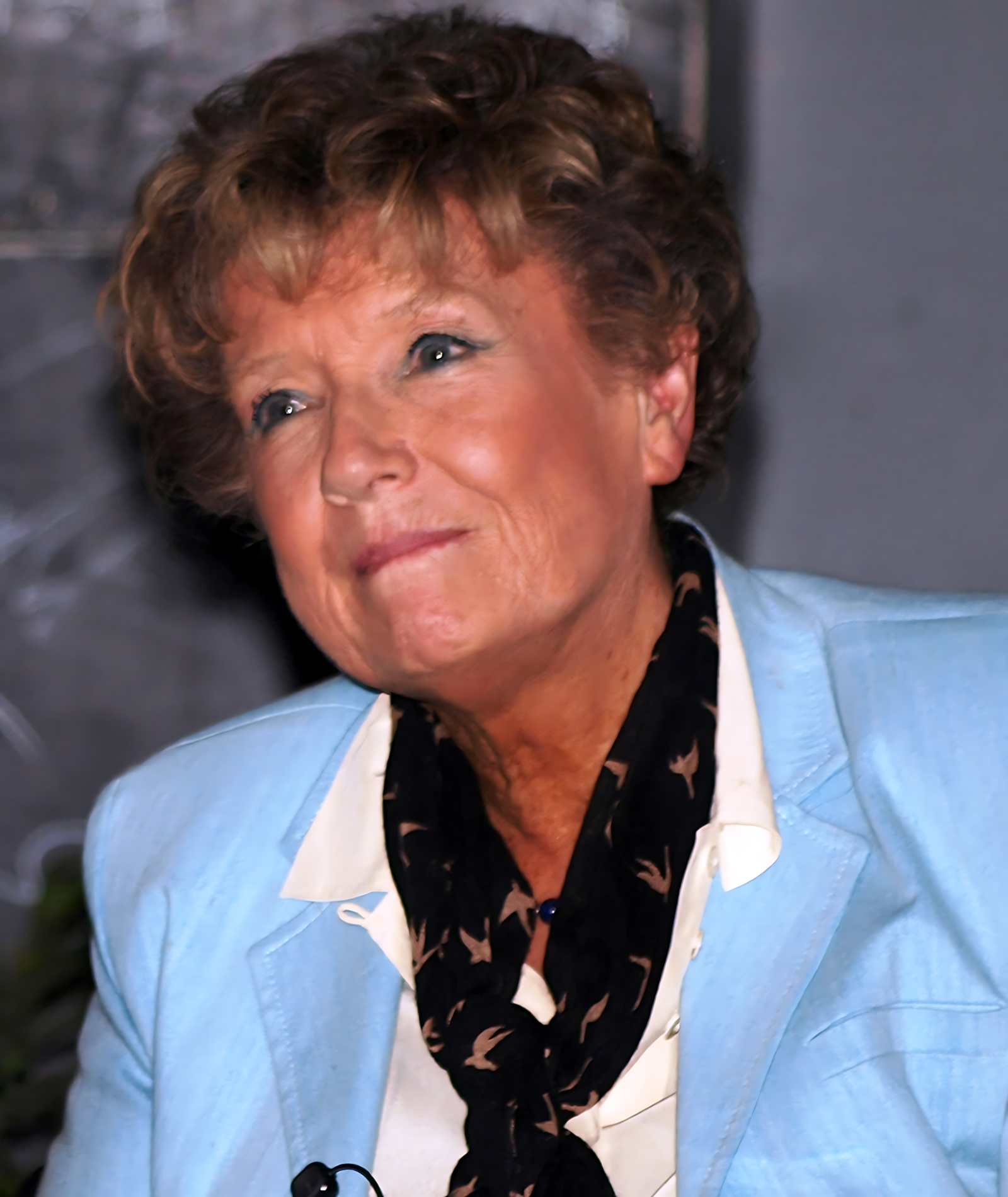
Dacia Maraini
Writer and playwright
She was born in Florence, the eldest daughter of the Florentine anthropologist, orientalist and writer Fosco Maraini and of the Palermitan painter, writer and gallery owner Topazia Alliata di Villafranca, who belonged to the Sicilian branch of the ancient house of the Alliata.
The future writer’s paternal grandfather was the Roman sculptor and art critic of Ticinese and Genoese origins Antonio Maraini, a deputy of the National Fascist Party from 1934 to 1939, as well as a close collaborator of the party official Achille Starace and a leading promoter of the artistic and cultural policies of the Fascist regime, while her paternal grandmother was the writer from the United Kingdom, born in what was then Habsburg Hungary and of partly Polish origins, Yoï Crosse. Her maternal grandfather, on the other hand, was the gastronome Enrico Maria Alliata di Villafranca, owner of the renowned Corvo winery and the last lord of the ancient cellars of Casteldaccia, while her maternal grandmother was Oria Maria Amelia «Sonia» Ortúzar Ovalle de Olivares (1892-1981), an opera singer who was however never able to make her debut, the daughter of a Chilean diplomat.
Maraini spent her childhood in Japan, where her parents had settled in 1939 and where her sisters Yuki and Antonella, known as Toni, were born. Following the fall of Fascism and the proclamation of the Armistice of Cassibile in 1943, by which Italy broke its ties with the Axis, the family — because of Topazia and Fosco’s refusal to declare themselves supporters of the Republic of Salò — was interned in a concentration camp by the Japanese authorities, where they suffered hunger.
Only in 1945 did the family manage to return to Italy, settling first in Sicily, at the estate of her maternal grandparents, Villa Valguarnera in Bagheria, and later in Rome. After that her father Fosco, alone, chose to return to Florence. These years are recounted by Maraini herself in her novel Bagheria:
I knew all too well the arrogance and the cruelty of the Mafia, which it was precisely the great Sicilian aristocratic families that nourished and helped to prosper so that they might dispense justice on their behalf among the peasants […] I wanted nothing to do with them. They were strangers to me, unknown. I had repudiated them forever ever since I was nine years old and had returned from Japan starving, utterly poor, with my dead cousin still lurking at the bottom of my eyes. […] I stood on the side of my father, who had kicked away the nonsense of those arrogant princes, refusing a countship that was nonetheless due to him as the husband of the eldest daughter of the duke who left no heirs. He had taken my mother by the hand and carried her off to Fiesole to go hungry, far from the squabbles of a stiff and anxious family. […] And yet there they were, they all fell upon me at once, with a rattle of old bones, at the moment when I decided, after years and years of postponements and refusals, to speak of Sicily. Not of an imaginary Sicily, of a literary Sicily, dreamed of, mythologised. — Dacia Maraini, Bagheria
After her parents’ separation, at the age of 18 Maraini joined her father, who in the meantime had moved to the capital.
She was for a long time the partner of Alberto Moravia, with whom she lived from 1962 to 1978. In Rome she formed close friendships with many writers and poets, including Pier Paolo Pasolini, Elsa Morante, Maria Bellonci and Moravia himself, taking her full place in the literary circle of the time.
Sources
- Wikipedia — Dacia MarainiConsulted for a biographical summary.